
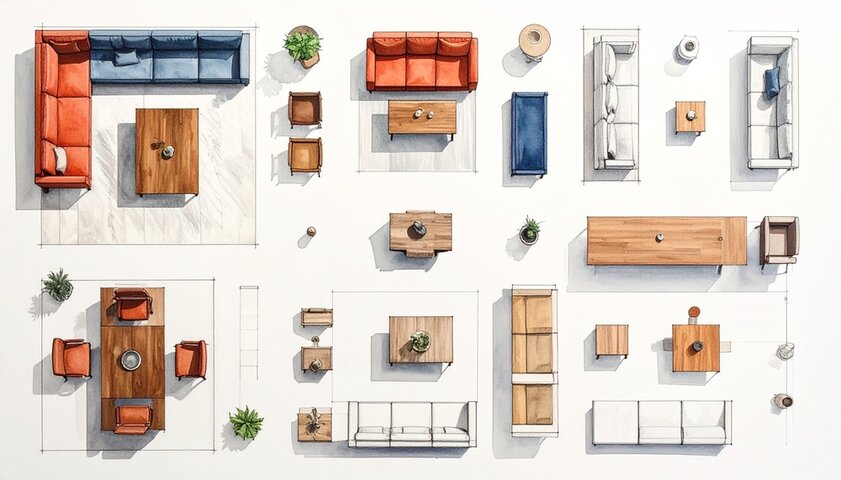
Moving into a rental often comes with the itch to buy new furniture. Maybe your space feels empty, or your old pieces don’t quite fit. But before you drop hundreds—or thousands—on new sofas, tables, or storage units, there’s a smarter way to approach it.
Small tweaks in how you arrange what you already own can transform a room completely. Clever furniture layout tricks, attention to flow, and using space creatively often make your rental feel bigger, brighter, and more functional—without spending a dime.
Here’s how to rethink your furniture strategy so you can get the most out of your rental space.
Start With a Floor Plan, Even a Simple One
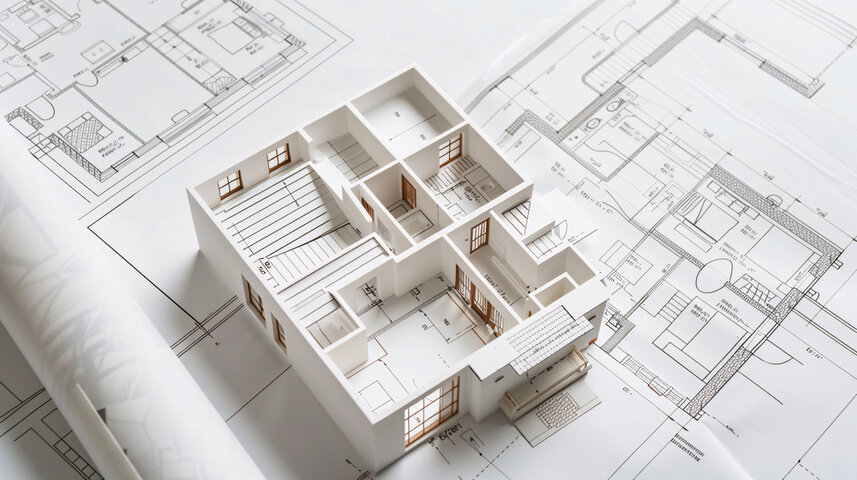
Photo Courtesy Of: Adobe Express
The first step is surprisingly simple: measure your space. Knowing the dimensions of your rooms, doorways, and existing furniture is essential before making any purchases. Take a careful look at the room and visualize how you move through it each day.
Sketching a floor plan can help you visualize how each piece fits, identifies awkward corners, and shows where traffic naturally flows. You don’t need fancy software—grid paper or free online tools work great too. Mapping out these adjustments with painter’s tape on the floor, can save you time, money, and buyer’s remorse. Often, renters discover they already own enough furniture; it just needs to be positioned differently.
Pay Attention to Feng Shui

Photo Courtesy Of: Adobe Express
Flow is everything. Rooms can feel awkward or closed off if furniture blocks natural movement, even slightly. Consider how you walk from the entryway to the living area or from the couch to the kitchen. Small adjustments—angling a chair, floating a sofa away from the wall, or moving a rug—can dramatically improve how the room feels and functions.
Once you start thinking about flow, you realize it’s not just about space, it’s about comfort. A room that allows smooth movement instantly feels larger and more inviting, giving even modest rentals a sense of freedom.
Use Zones to Define Purpose
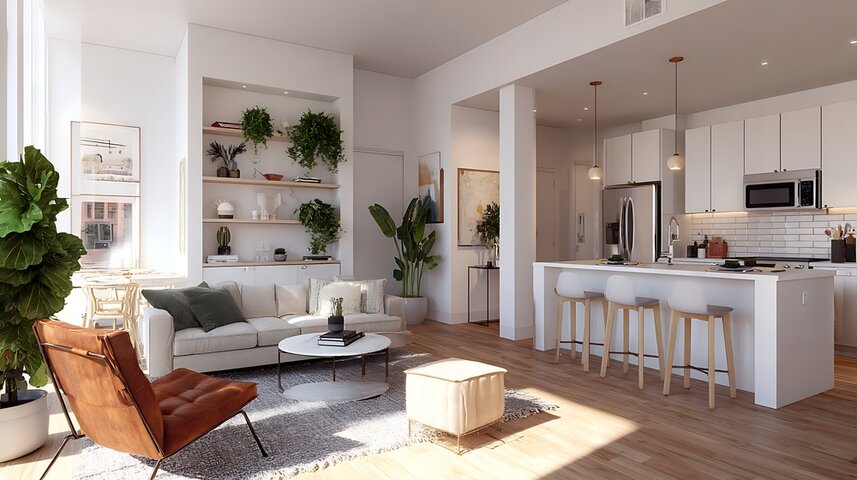
Photo Courtesy Of: Adobe Express
Many rentals combine multiple functions into a single room. For example, a living room might double as a workspace or a dining area while a bedroom might double as an exercise space. Creating zones helps to keep each function organized and prevents clutter.
A small bookshelf can subtly separate the desk from the living space, a rug can anchor the seating area, or a single chair can mark a reading corner. By creating intentional zones, you give your home structure without adding furniture. Each area has a purpose, making the room feel organized rather than chaotic. This simple approach is one of the easiest ways to maximize your rental space while staying renter friendly.
Mirror, Mirror on the Wall
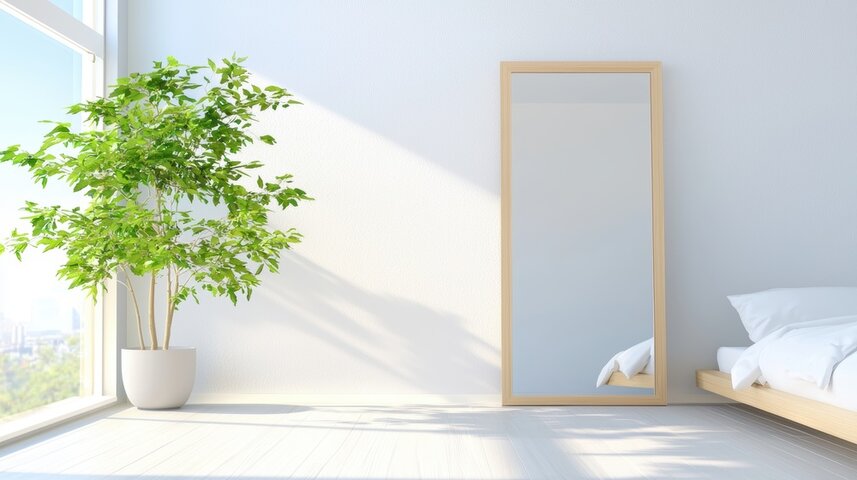
Photo Courtesy Of: Adobe Express
Natural light and mirrors are underrated when it comes to layouts. Positioning furniture to maximize sunlight or leaning a mirror against a wall to reflect light can make a room feel bigger almost instantly. In rentals where structural changes aren’t allowed, these tricks offer a renter-friendly way to enhance space.
A well-placed mirror can make a small living room feel airy, brighten a dark corner, and change the overall energy of the room. Often, it’s the light and reflection, not the furniture itself, that transforms the atmosphere. For even more ways to bring light into your rental, check out 5 Renter Friendly Lighting Hacks to Brighten Your Home
Think Vertical, Not Just Horizontal
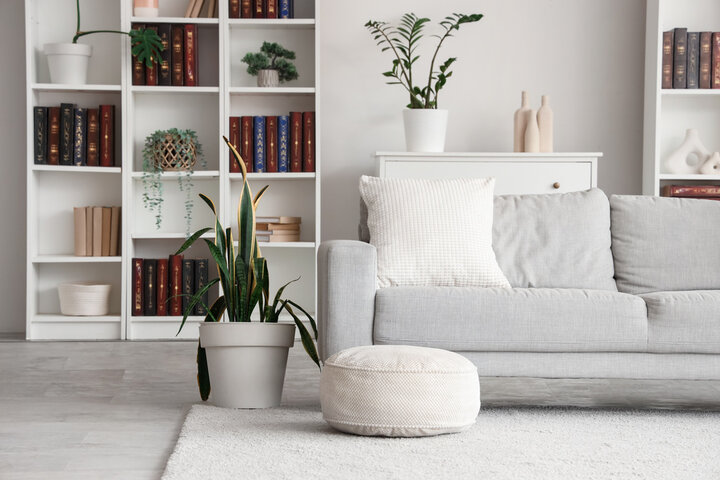
Photo Courtesy Of: Adobe Express
Many renters focus on floor space and forget about vertical potential. Tall bookshelves, wall-mounted décor, or even decorative hooks free up floor space while adding storage and keeping everything within reach. Vertical arrangements draw the eye upward, making ceilings feel higher and rooms more open and spacious.
Focusing on going vertical doesn’t just improve organization—it creates a sense of dimension and balance, which is especially important in smaller or open-plan rentals. Vertical solutions also enhance storage, which you can learn more about by checking out our blog 10 Storage Solutions You Didn’t Know You Needed.
Making Your Rental Work for You
Before rushing out to buy new furniture, experiment with some (or all) of these strategies. Start with flow, zoning, light, and vertical space. You might be surprised at how much your rental home can change without spending a dime! Sometimes, thoughtful furniture layouts and a few creative adjustments are all it takes to make a rental feel like home.
For even more ways to make your home feel bigger, check out our guide to 10 Renter-Friendly Decorating Ideas to Make Your Space Feel Bigger
